
Top 5 Shipping Container Modifications to Make Your Container Work Harder
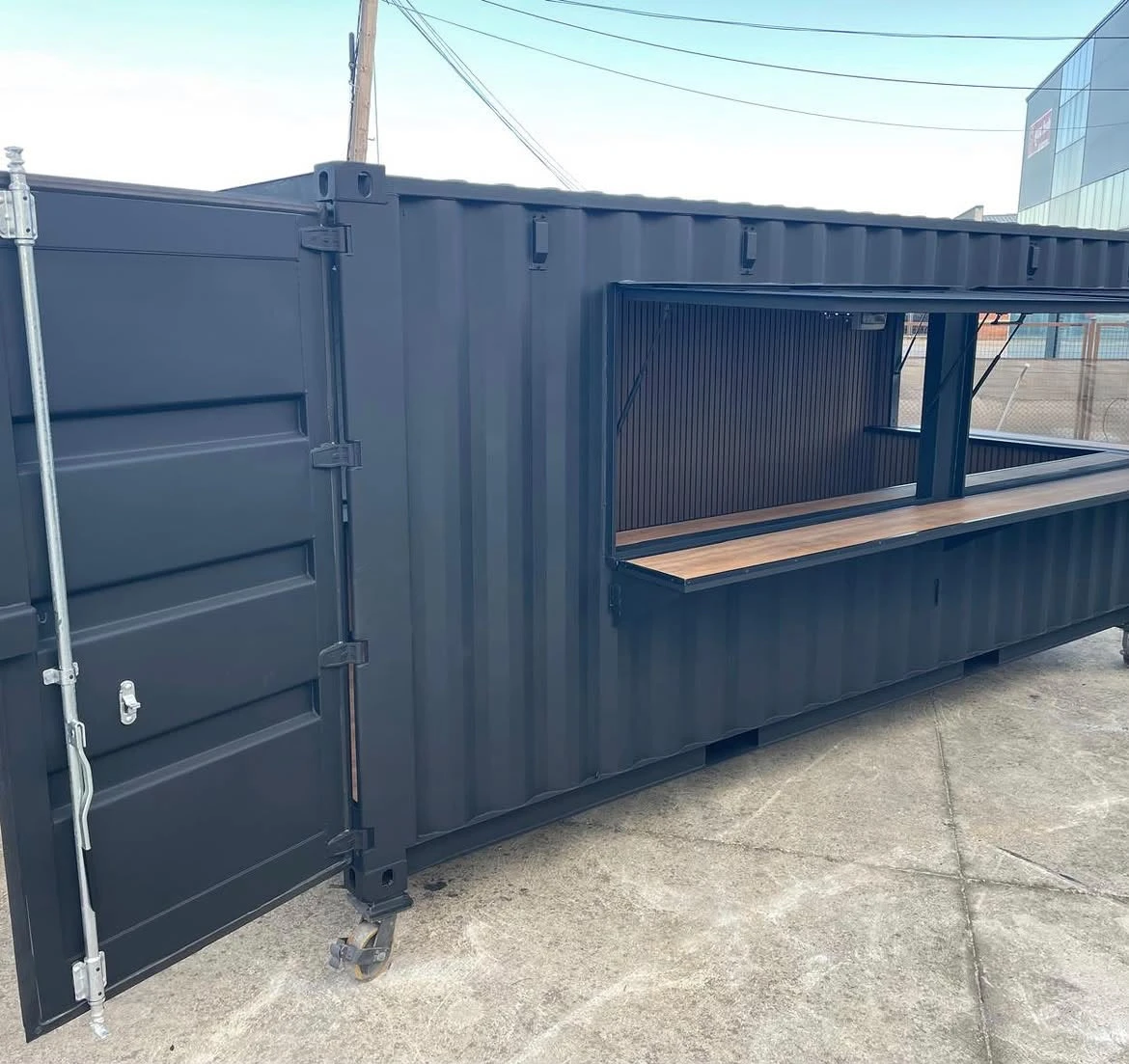
A standard container is a strong, secure steel box, and that is exactly why it is such a good starting point. With the right shipping container modifications, the same box becomes a tool store with easy access, a climate-controlled archive, a jobsite office or a retail kiosk. These are the five upgrades that add the most value for our customers.
Plan modifications before you buy
Some modifications work best on specific containers. A high cube gives more headroom for insulation, and a one-trip unit has straight walls for clean cut-outs. Tell us your plans and we will recommend the right base container.
1. Roll-up doors
Standard cargo doors are secure but heavy, and they need clear swing space. A roll-up door, on the end or cut into the side, lets you open up in seconds with no swing clearance. It is ideal for workshops, garden and equipment storage, and containers you open many times a day.
Side roll-up doors turn a 40 ft container into a row of easy-access bays. See our 40 ft container with roll-up side doors and 10 ft container with roll-up door.
Cutting steel weakens the frame
Any large opening removes wall steel. A proper installation frames the opening with steel sections so the container stays square and strong. Avoid DIY cuts on containers that will be stacked or moved.
2. Ventilation
Steel containers can suffer from condensation, sometimes called “container rain”. Warm, moist air meets the cool steel roof, and water drips onto whatever you store. Adding vents helps equalise temperature and humidity and cuts condensation.
- Louvered vents: These are passive and inexpensive. They are usually fitted in pairs, high on opposite walls, for cross-flow.
- Turbine (whirlybird) roof vents: These use wind to pull warm air out.
- Powered exhaust fans: These suit workshops and offices with electrical service.
For hazardous or chemical storage, ventilation and containment are especially important. Our bunded chemical storage container is an example.
3. Insulation and lining
Insulation turns a container from a hot-and-cold box into a usable room. It also reduces condensation.
| Type | Advantages | Consider |
|---|---|---|
| Closed-cell spray foam | Seals the steel, strong moisture barrier, good R-value per inch | Higher cost and professional application |
| Rigid foam panels | Good R-value, DIY-friendly | Joints must be sealed to prevent condensation |
| Mineral wool or batts in stud walls | Affordable, fire-resistant | Needs a vapour barrier and loses interior width |
Finish with plywood, metal liner panels or drywall, depending on the use. Remember that each layer reduces interior space. This is the main reason conversions usually start with a high cube container.
4. Windows and personnel doors
A personnel (man) door lets people come and go without opening heavy cargo doors, and it is essential for offices and workshops. Windows bring in daylight and airflow. Security windows with bars or steel shutters keep the container secure when unattended.
Full side-opening containers take this idea to the extreme, opening the whole long side for retail displays, events and wide equipment access. See our 40 ft full side access high cube.
5. Shelving, lighting and electrical
Organisation is what turns storage space into usable space.
- Shelving and racking: This can bolt to the container’s lashing rings or rest on its own frame. Adjustable steel shelving is the most flexible.
- Lighting: LED fixtures, or solar-powered lighting for off-grid sites.
- Electrical: A sub-panel, outlets and an exterior hookup point. Electrical work should be completed by a licensed electrician to local code.
- Security: A lockbox protects the padlock from bolt cutters and is one of the cheapest, most effective upgrades.
The best modification is the one that solves your daily frustration: access, moisture, temperature or organisation. Start there.
Ready-made modified containers
If you would rather skip the build, we carry ready-to-use modified units. Examples include portable site offices with toilets, container kiosks and bars, and roll-up door storage containers. Browse all containers, or explore more ideas in our modifications and conversions articles.
Frequently asked questions
Do modifications affect the container’s value?
Quality modifications for a specific use (offices, workshops, storage with roll-up doors) generally add value for buyers who need that use. Poorly framed cut-outs can reduce value.
Can I modify a used container?
Yes. Choose a wind & watertight or cargo worthy unit with straight walls and a sound roof. Heavy dents make framing doors and windows harder. Our one-trip vs used guide explains the grades.
Do I need a permit for a modified container?
It depends on your location and the use. Electrical work, occupied spaces and permanent foundations are the items most likely to need permits. Check with your local building department.
Want a container modified for your project?
Tell us how you will use it and we will recommend the base container and modifications, then quote the complete package.