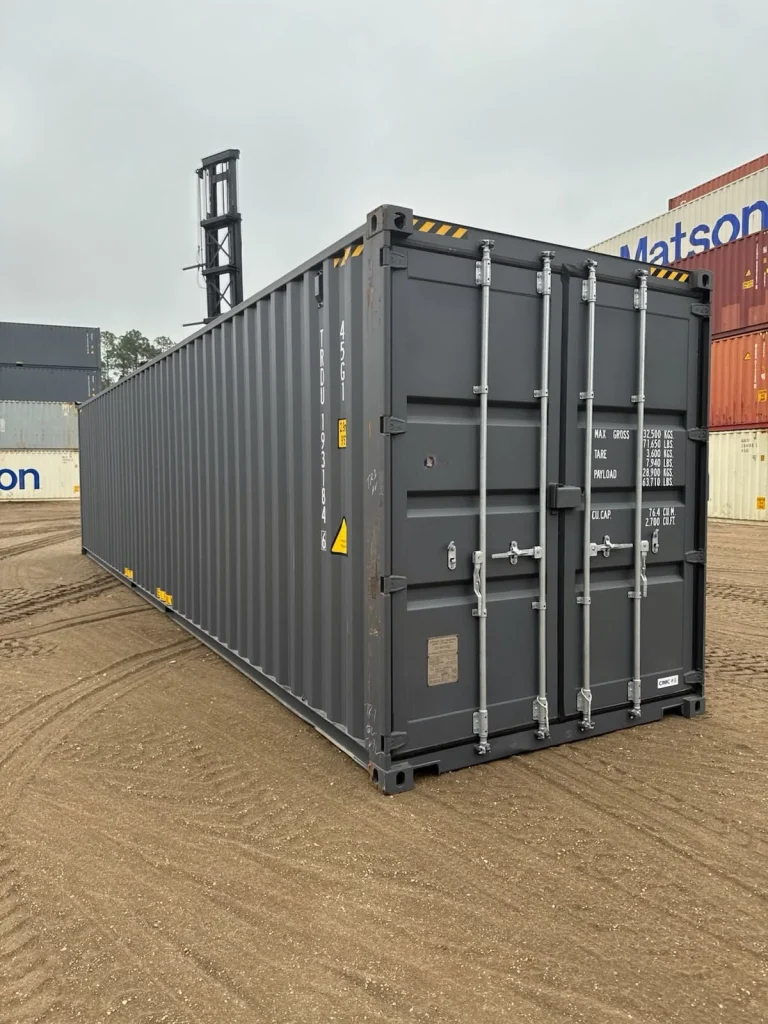
High Cube vs Standard Container: Which Size Do You Actually Need?
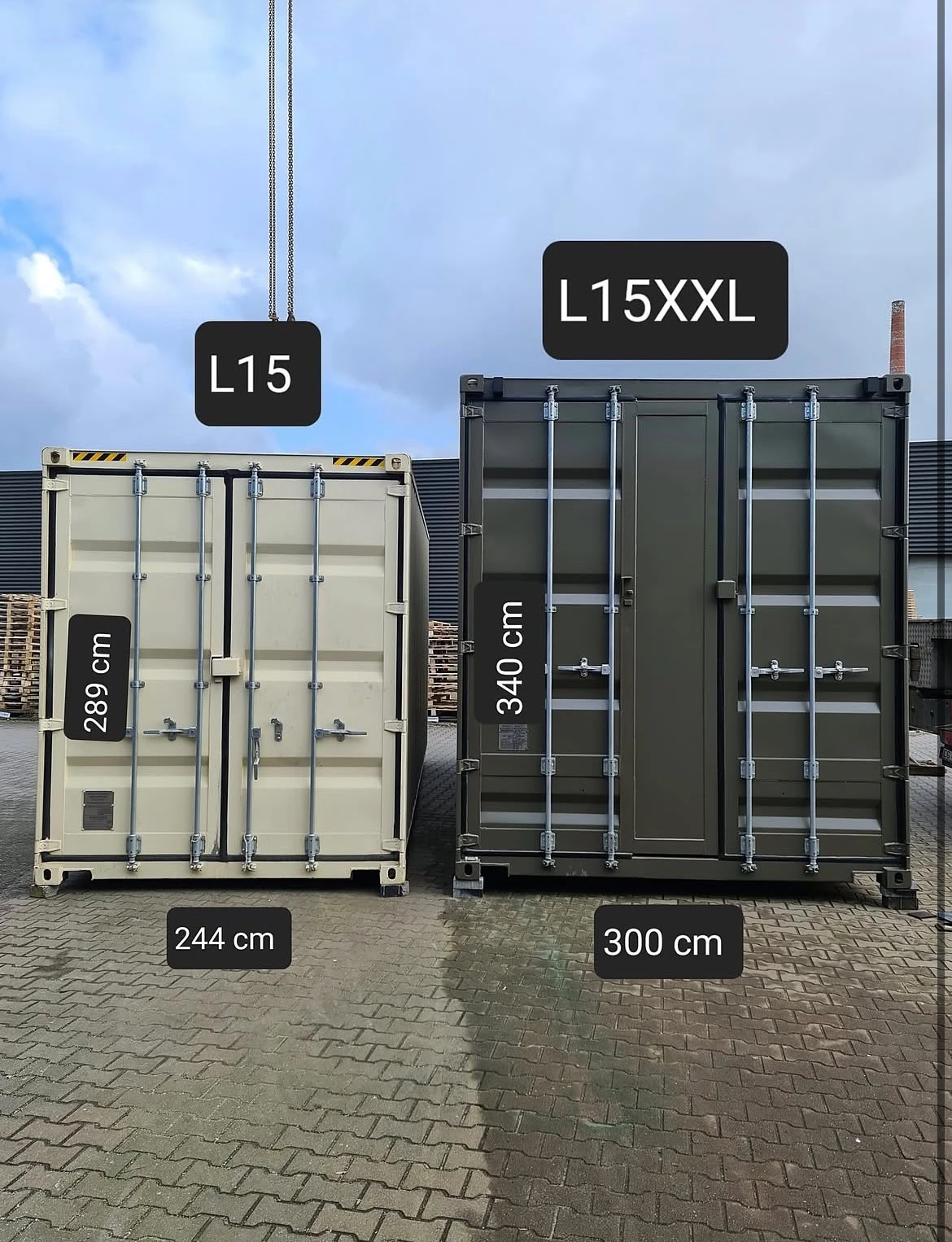
A high cube container is exactly one foot taller than a standard container. On paper that sounds minor. In practice, that foot decides whether your pallet racking fits, whether a converted office feels cramped, and whether you can stack two IBC totes inside. This guide compares high cube vs standard container sizes so you can buy the right box the first time.
Quick answer
Choose a standard container for everyday storage when you want the lowest price. Choose a high cube when you store tall items, add shelving or insulation, or plan to convert the container into an office, workshop or living space.
What is the difference between a high cube and a standard container?
Both types share the same length and width. The only structural difference is height. A standard container is 8 ft 6 in tall on the outside. A high cube is 9 ft 6 in tall. Everything else stays the same: the corner castings, forklift pockets (on 20 ft units) and ISO lengths.
You can usually spot a high cube from the ground. Many carry yellow and black hazard striping along the top rail, and the ISO size code on the door starts with a 4 or 5 rather than a 2 (for example 45G1 for a 40 ft high cube, compared with 42G1 or 22G1 for standard dry containers).
Container dimensions compared
The figures below are typical. Exact interior measurements vary slightly by manufacturer, and older used units may differ by an inch or two. Confirm the listing before you plan a tight-fitting build-out.
| 20 ft standard | 20 ft high cube | 40 ft standard | 40 ft high cube | |
|---|---|---|---|---|
| External height | 8 ft 6 in | 9 ft 6 in | 8 ft 6 in | 9 ft 6 in |
| Internal height | approx. 7 ft 10 in | approx. 8 ft 10 in | approx. 7 ft 10 in | approx. 8 ft 10 in |
| Internal length x width | approx. 19 ft 4 in x 7 ft 8 in | approx. 19 ft 4 in x 7 ft 8 in | approx. 39 ft 5 in x 7 ft 8 in | approx. 39 ft 5 in x 7 ft 8 in |
| Door opening height | approx. 7 ft 5 in | approx. 8 ft 5 in | approx. 7 ft 5 in | approx. 8 ft 5 in |
| Capacity | approx. 1,170 cu ft | approx. 1,300+ cu ft | approx. 2,390 cu ft | approx. 2,700 cu ft |
A 40 ft high cube gives you roughly 12–13% more cubic space than a 40 ft standard for the same footprint on your lot. If you pay for land, a slab or a gravel pad, that extra volume costs nothing in ground space.
When a standard container is the better choice
You need simple, affordable storage
For farm equipment, seasonal inventory, tools or household overflow, the standard 7 ft 10 in interior height is plenty. Standard units are the most common containers on the market, so availability is usually better and the price is lower.
Height is restricted on your site
Some sites limit height through HOA rules, local zoning, or low tree canopies and power lines along the delivery path. A standard container also sits a little lower on a tilt-bed truck, which can help on tight residential drop-offs. If you are unsure about clearance, read our delivery site prep guides before ordering.
You want to stack containers cheaply
Standard containers are easy to source in matching pairs. If you plan a two-high storage yard, a standard height keeps the total stack lower and simpler to access.
When a high cube is worth the upgrade
Tall items and pallet racking
Loaded pallets, machinery, rolled goods and tall shelving use vertical space quickly. The extra foot often lets you add another shelf level or stand-up clearance above racking. It also makes loading with a forklift less fiddly because of the taller door opening.
IBC totes and bulk liquids
A standard IBC tote is roughly 46 in tall. Two stacked totes plus a spill pallet or bund quickly approach the internal height of a standard container. That is why high cube units are the usual choice for double-stacked IBC storage. See our 20 ft high cube suitable for IBC storage as an example.
Offices, workshops and living spaces
Insulation, wall lining, a raised floor and ceiling lights each take a few inches of height. In a standard container, that can drop the finished ceiling below 7 ft 4 in, which feels tight. In a high cube you typically keep a comfortable ceiling of around 8 ft even after the build-out. That is why most conversions start with a high cube. Our container modifications articles cover the most popular upgrades.
The rule of thumb: if anything will be added to the walls, ceiling or floor, start with a high cube.
Price: how much more does a high cube cost?
A high cube usually costs more than a standard container of the same length and condition. It uses more steel and is in higher demand for conversions. The gap varies by market, grade (one-trip or used) and stock levels. Compare live listings side by side, such as our 40 ft used standard container and 40 ft used high cube container, or browse all containers for sale.
Do not forget delivery height
A high cube on a tilt-bed trailer needs more overhead clearance during unloading. Check gates, carports, tree branches and power lines along the route and at the drop spot.
Quick decision checklist
- Will you store items taller than about 7 ft, or double-stack pallets or totes? Choose a high cube.
- Will you insulate, line the walls or install a ceiling? Choose a high cube.
- Is it basic storage on a budget? Choose a standard.
- Is your site height-restricted by HOA, zoning or overhead obstacles? Choose a standard, and confirm with us before ordering.
- Is resale value important? Both hold value well, but high cubes are popular with conversion buyers.
Frequently asked questions
Is a high cube container wider than a standard container?
No. Both are 8 ft wide on the outside and about 7 ft 8 in wide inside. Only the height changes.
Can a high cube container be delivered on the same truck?
Usually yes. The same tilt-bed or flatbed trailer handles both. The main difference is the extra overhead clearance needed while the container slides off the bed.
Are high cube containers only available in 40 ft?
The 40 ft high cube is the most common size, but 20 ft and even 10 ft high cubes are available. See our 20 ft one-trip high cube for an example.
Not sure which height fits your project?
Tell us what you plan to store or build and where it is going. We will recommend the right size and condition and send you a quote with delivery options.